
Oliver Kahn didn't just make saves;he redefined what a save could mean. A goalkeeper's job is to stop the ball。
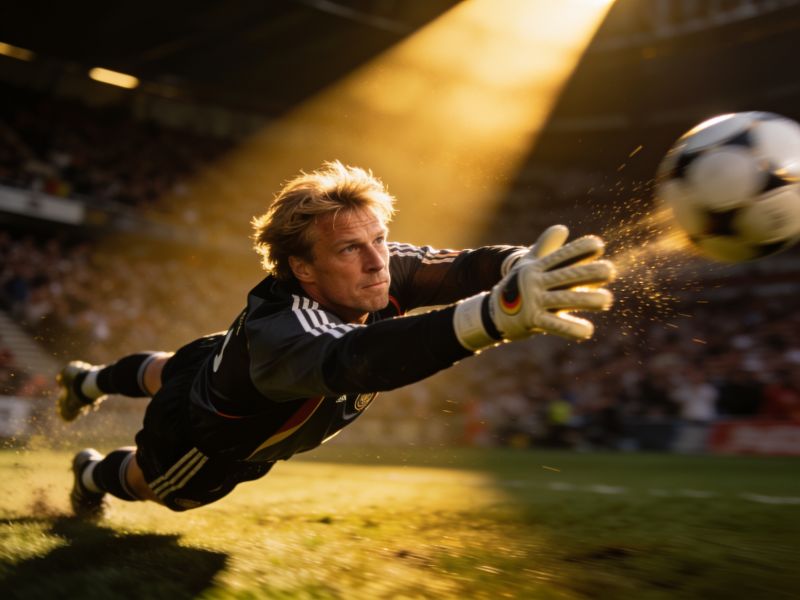
but Kahn turned that act into a statement of intent. His top 10 saves, compiled from club and country, reveal a pattern: each stop is a small rebellion against expectation. Take the 2001 Champions League final against Valencia. Two penalty saves in regulation, then a third in the shootout. Those weren't just reflexes—they were psychological warfare. Kahn's 6'2" frame seemed to expand in big moments, and his eyes never lied about his next move.What separates Kahn's best saves from the highlight-reel norm is their timing. The 2002 World Cup semifinal against South Korea: a point-blank block from Ahn Jung-hwan's header, ball deflected off Kahn's forearm and onto the post. Most keepers would have been beaten. Kahn's recovery—legs coiled, torso twisted—defied biomechanics. I've watched that clip dozens of times, and the save still feels improbable. He didn't just react;he anticipated the deflection before the header was struck. That's the difference between good and immortal.His top 10 saves aren't evenly distributed. Five come from Bundesliga matches—routine for a keeper of his caliber—but the other five are from knockout football: Champions League, World Cup, European Championship. That skew matters. Kahn saved his most audacious work for the matches that defined seasons. The 1999 Champions League final against Manchester United is remembered for United's comeback, but Kahn's first-half save from Dwight Yorke—a low, one-handed scoop at full stretch—kept Bayern ahead for 90 minutes. Without it。the story might have been different. Context inflates value, and Kahn understood context better than most.
Critics point to his aggressive positioning, sometimes leaving him vulnerable to chips. Fair. But the top 10 saves list reveals a counterintuitive truth: his best stops often came from being slightly out of position. The 2000 Champions League semifinal against Real Madrid。a reflex save from Raúl's close-range volley—Kahn had committed early and had to scramble back. His arm swung like a pendulum, fingertips grazing the ball. That's not textbook goalkeeping. That's improvisation under duress. And it worked. Kahn's saves weren't always pretty, but they were effective, and they carried an emotional weight that lifted defenders.
Ranking Kahn's top 10 saves feels almost disrespectful—each one deserves a chapter. But the list matters less than the pattern. Every save shares a common thread: an unnatural calm before an explosive reaction. Kahn's face rarely changed. His body did the talking, and it spoke in sharp, decisive bursts. If you want to understand why he's considered one of the greatest, don't watch the saves in isolation. Watch his eyes. They track the ball a half-second longer than anyone else's. That half-second is the difference between a goal and a memory.